"Sleep hygiene" sounds clinical, but it simply means the everyday habits and bedroom conditions that make good sleep more likely. Most people already know the basics. What they rarely know is which basics they are actually missing. This quick self-check fixes that: seven questions about your routine, a simple score and a clear next step for each result. It takes about two minutes and you only need to be honest with yourself.
Quick answer
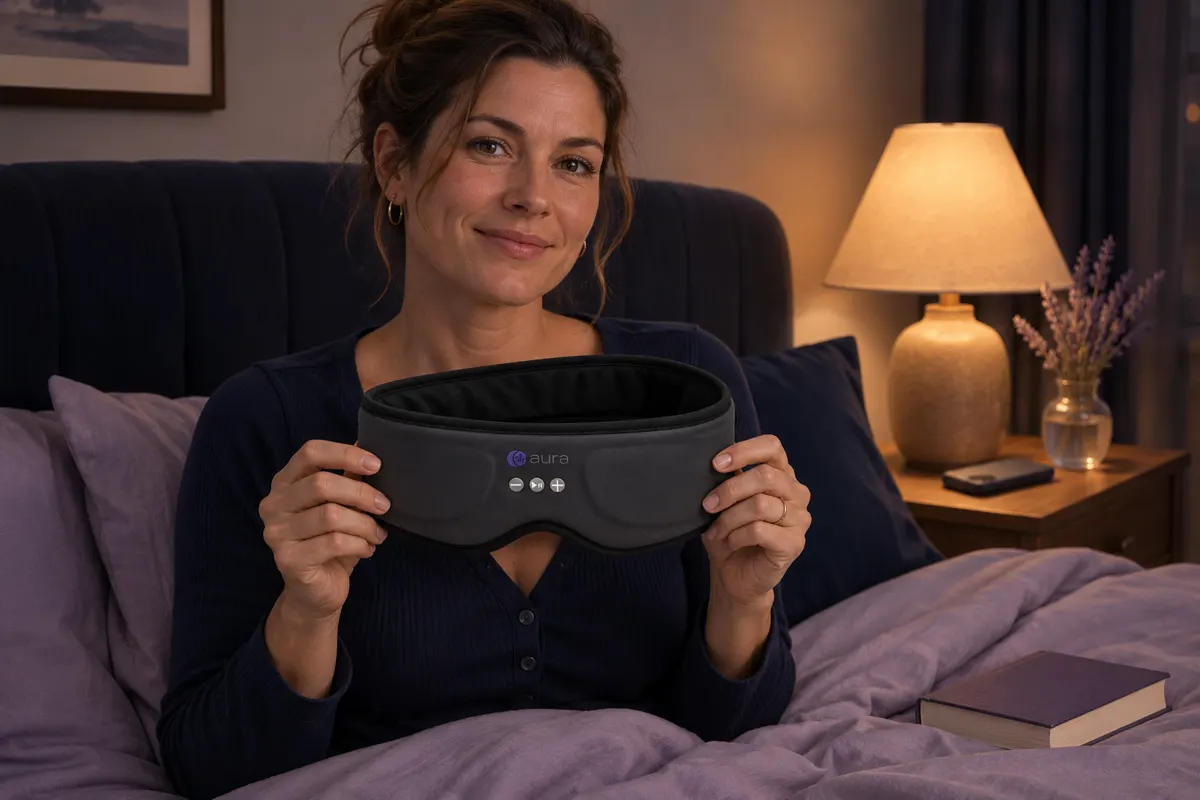
Good sleep hygiene comes down to a steady schedule, a dark, quiet and cool bedroom, a screen-free wind-down, and smart timing for caffeine, alcohol and big meals. Score the seven questions below from 0 to 2. 11 to 14 points: your routine is in good shape. 6 to 10: there is room to adjust, usually light, noise or screens. 0 to 5: it is worth starting a simple routine now. For the darkness and sound part, the tool we recommend is the AURA Bluetooth Sleep Mask. This is a habits check, not a diagnosis.
How to score yourself
Think about a typical week, not your best or worst night. For each question give yourself 2 points if the answer is "yes, almost always", 1 point for "sometimes" and 0 points for "rarely or never". Add them up at the end. Grab a pen, or just count on your fingers.
The 7 questions
- Do you wake up at roughly the same time every day, weekends included (within about an hour)?
A regular wake time anchors your body clock. The CDC lists a consistent schedule among its first tips for better sleep. - Do you give yourself at least 7 hours for sleep most nights?
The CDC recommends at least 7 hours a night for adults. If your schedule only allows six, no other habit can fully make up for it. - Is your bedroom truly dark when you sleep?
Streetlights, early sunrise, a partner's reading lamp or standby lights all count. Even modest light can make sleep lighter. - Is your bedroom quiet, or is the noise masked?
Traffic, a snoring partner, a neighbor's TV or a noisy heater. Irregular sounds are the ones that wake light sleepers most. - Do you put screens away 30 to 60 minutes before bed?
Scrolling keeps the mind switched on and pushes bedtime later. Our guide on blue light and melatonin explains why the last hour matters. - Do you stop caffeine by early afternoon and keep alcohol and heavy meals away from bedtime?
Caffeine can stay in your system for hours, and alcohol tends to fragment the second half of the night. - Do you have a short wind-down routine (20 to 30 minutes) that tells your body it is time to sleep?
Dim lights, a shower, a book, calm audio. The same steps in the same order work like a switch.
Your result: the 3 bands
| Score | What it means | Your next step |
|---|---|---|
| 11–14 Routine on track | Your sleep hygiene habits are solid. Keep them steady through travel and the holidays. | Protect what works; fine-tune the one question where you scored lowest. |
| 6–10 Room to adjust | A few gaps, usually light, noise, screens or an irregular wake time, are costing you sleep quality. | Fix the two lowest-scoring questions first. A blackout mask with built-in sound covers light and noise in one step. |
| 0–5 Worth starting now | Your nights are working against you, and small changes will make a noticeable difference. | Start with a fixed wake time and a dark, quiet bed; add a wind-down routine in week two. |
Band 1 (11–14): keep it steady
Congratulations, your basics are in place. The risk now is drift: late December nights, travel, a new work schedule. Pick your lowest-scoring question and make it a 2. If you travel a lot, our guide on sleeping in a new place helps you keep the routine on the road.
Band 2 (6–10): fix the two weakest links
This is the most common result. Most people in this band score well on intentions and poorly on environment: a bedroom that is not quite dark, a partner who snores, a phone that stays in bed. Two practical moves:
- Make darkness and quiet automatic. Instead of fighting every light source and noise one by one, cover your eyes and mask the sound at the same time. That is exactly what a Bluetooth sleep mask like the AURA does: blackout eye cups plus thin speakers playing rain or brown noise, with an auto-shutoff timer.
- Move the phone out of reach. Charge it across the room and start your audio before you lie down.
Band 3 (0–5): start with three habits
- Week 1: set one wake-up time and keep it every day, even after a bad night.
- Week 2: make the bed dark and quiet: blackout mask, masking sound, cooler room.
- Week 3: add a 20-minute wind-down: dim lights, screens away, the same calm audio every night.
One change per week is easier to keep than seven changes on Monday. Redo the self-check after three weeks and compare your score.
Common sleep hygiene mistakes
- Sleeping in to "catch up" on weekends. It shifts your body clock and makes Monday night harder.
- Lying in bed awake for a long time. If you are wide awake for a long stretch, get up, do something calm in dim light and return when sleepy.
- Using the TV or phone speaker as background noise. Bright screens and sudden volume changes work against you; steady masking sound close to your ears is gentler.
- Ignoring the room temperature. Most people sleep better in a cool room with warm bedding.
- Expecting one gadget to fix everything. The best results come from a tool plus habits.
Sleeping in for hours on weekends is one of the most common mistakes of all. Our 48-hour weekend plan for social jet lag shows how to catch up without wrecking Monday.
When to talk to a doctor
This self-check is about everyday habits; it is not a diagnosis and it does not replace medical advice. Talk to a doctor if you have trouble falling or staying asleep most nights for several weeks, feel very sleepy during the day or nod off while driving, snore loudly with gasping or pauses in breathing, or have restless, uncomfortable legs at night. These can point to sleep disorders such as insomnia or sleep apnea that deserve proper care.
Our recommendation: the AURA Bluetooth Sleep Mask
For bands 2 and 3, the fastest win is usually the environment, and two of the seven questions (darkness and noise) can be solved with one tool. The AURA Bluetooth Sleep Mask is the option we recommend: it was designed exactly for light sleepers who want a dark, calm bubble every night, wherever they sleep.
- Complete darkness: a 3D contoured blackout shell that leaves your eyelids free, about 24 grams.
- Soft sound right over your ears: ultra-thin speakers inside the band play rain, brown noise or a calm podcast from your phone, side-sleeper friendly and quiet for your partner.
- A built-in wind-down: its 1 to 2 hour auto-shutoff means the audio fades out on its own, so the phone can stay across the room.
- Built for nightly use: Bluetooth 5.4, up to 10 hours per charge, and the electronics slide out so the fabric can be hand-washed.
- Risk-free: a 90-day money-back guarantee plus a 1-year warranty.
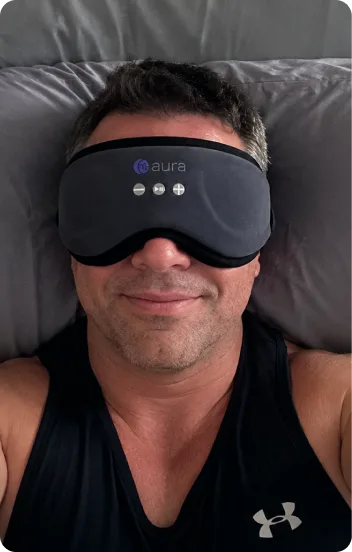
It is rated 4.8/5 across more than 17,000 verified customer reviews on the official store. With promo code SLEEP26 (50% off), a single mask is $59.99, a 2-pack is $53.99 per mask and a 3-pack is $47.99 per mask. Compare the packs on the AURA overview page, or read our full AURA review.
Frequently asked questions
What are good sleep hygiene habits?
A consistent wake time, at least 7 hours set aside for sleep, a dark, quiet and cool bedroom, screens away 30 to 60 minutes before bed, caffeine stopped by early afternoon, alcohol and heavy meals kept away from bedtime, and a short wind-down routine.
What is poor sleep hygiene?
Habits that work against sleep: irregular bed and wake times, scrolling in bed, late caffeine or alcohol, a bright or noisy bedroom, and long weekend lie-ins. Most people have one or two of these, not all of them.
Is this quiz a diagnosis?
No. It scores everyday habits only. If you have ongoing trouble sleeping, loud snoring with pauses in breathing or strong daytime sleepiness, talk to a doctor.
How long does it take to improve sleep hygiene?
Many people notice that falling asleep feels easier within one to two weeks of a fixed wake time and a darker, quieter bedroom. Change one habit at a time and redo the self-check after three weeks.
Can a sleep mask help with sleep hygiene?
Yes, for the environment part. A blackout mask makes the room dark wherever you are, and a Bluetooth mask such as the AURA also plays masking sound close to your ears with an auto-shutoff timer, which covers light and noise in one step.