You are tired, the bed is perfectly fine, and yet the first night at your parents' house, a hotel or a friend's guest room you lie awake listening to every creak, every passing car and every unfamiliar hum. Then on the second night you sleep almost normally. It is not in your head — or rather, it is, in a very specific way. Here is why the first night somewhere new is so hard, and how to sleep well wherever the holidays take you.
Quick answer
You sleep badly in a new place because your brain keeps partly on watch. Sleep researchers call it the first-night effect: in unfamiliar surroundings, part of the brain stays more alert during deep sleep and reacts faster to sounds, so you take longer to fall asleep and wake more easily. Unfamiliar light and noise make it worse. The fix is to make any room feel familiar and predictable: keep your usual routine, bring your own sleep cues, and control light and sound at your eyes and ears. A Bluetooth sleep mask such as the AURA Bluetooth Sleep Mask brings the same darkness and the same soothing sound to every bed, which is why it is the travel tool we recommend.
What the first-night effect is
Sleep labs noticed it decades ago: people almost always sleep worse on their first night in the lab than on the nights that follow. That is why many sleep studies throw out night one. In 2016, a team at Brown University published a study in Current Biology that looked at what is going on in the brain during that first night.
What they found is fascinating. On the first night in a new place, a network in the left hemisphere of the brain stayed more active than the right during deep sleep, and it responded more strongly to unusual sounds. Volunteers whose brains showed more of this imbalance took longer to fall asleep, and sounds played to the “watchful” side were more likely to wake them. By the second night, the imbalance had largely faded.
In other words, your brain is doing a mild version of what some birds and dolphins do: keeping one side a little more on guard in an unfamiliar environment, just in case. It is a protective reflex, not a sleep problem. But it does mean the first night at the in-laws' is genuinely lighter sleep.
Why the holidays make it worse
- New noises. A different furnace, a ticking clock, a dog down the hall, relatives up late, traffic on an unfamiliar street. Your on-watch brain notices every one.
- New light. Thin guest-room curtains, a street lamp outside, a hallway light under the door, a blinking smoke detector or TV standby light.
- A different bed and pillow. Firmer, softer, shorter or shared with a partner in a smaller space than you are used to.
- A broken routine. Late dinners, extra drinks, travel days and time-zone changes shift your body clock. If you are flying, our guide to sleeping on a plane covers the trip itself.
- A crowded house. Kids on air mattresses, a snoring uncle through the wall, early risers in the kitchen. If you share the room with a snorer, see how to sleep with a snoring partner.
What people usually try (and how it works out)
| What they try | What happens |
|---|---|
| Just pushing through the first night | Works if you only stay one night; for a week-long visit, you start the holiday already tired |
| A nightcap to knock out | Alcohol can make you drowsy but tends to fragment sleep in the second half of the night |
| Scrolling until you feel sleepy | Bright screens and stimulating content push sleep later |
| Foam earplugs | Block some noise but can feel uncomfortable for hours and make you feel cut off in an unfamiliar house |
| Bringing your own darkness and sound | The same cues every night tell your brain this room is safe and familiar, so it settles faster |
9 ways to sleep better in a new place
- Keep your usual bedtime. Even with late dinners, try to go to bed and wake up within an hour of your normal times. Your body clock is the most portable sleep aid you own.
- Bring familiar cues. Your own pillowcase, a familiar scent, the same pajamas, the same pre-bed routine. Familiarity is exactly what your watchful brain is looking for.
- Black out the room at eye level. You cannot change your host's curtains, but you can create darkness right at your eyes. A contoured mask blocks street lamps, hallway light and standby LEDs. We compared the options in sleep mask vs. blackout curtains.
- Give your ears one steady sound. Steady white noise, rain or brown noise covers the sudden, unfamiliar sounds that trigger the on-watch response. Use the same sound every night so it becomes your “home” sound.
- Explore the room before bed. Know where the door, light switch and bathroom are. A quick look around reduces the background alertness of an unknown space.
- Go easy on the nightcap. One drink with dinner is fine; several close to bedtime usually means lighter, broken sleep later in the night.
- Keep it cool. Guest rooms are often overheated in winter. Crack a window or ask for a fan, which also adds helpful steady noise.
- Dim the screens an hour before bed. Bright light at night holds back melatonin; see how light at night affects sleep.
- If you wake, do not check the clock. Breathe slowly, keep your eyes covered and let the sound play. If your mind starts racing, the techniques in can't sleep because your mind is racing help.
A simple holiday-visit sleep kit
| Pack this | Why it helps |
|---|---|
| A contoured Bluetooth sleep mask | Darkness and steady sound in one, the same in every bed |
| Your own pillowcase | A familiar feel and scent your brain recognizes |
| Phone charger and a sleep-sound playlist | Your usual sounds, ready every night |
| Comfortable layers | Guest rooms run hot or cold; layers let you adjust |
| A short wind-down routine | Ten minutes of reading or stretching tells your body it is bedtime, wherever you are |
When to talk to a doctor
A rough first night away from home is normal. If you sleep badly most nights even at home, snore loudly or stop breathing in your sleep, feel very sleepy during the day, or rely on alcohol or sleep pills to get through most nights, talk to a doctor. Many sleep problems are very treatable. A sleep mask helps you create good conditions for sleep; it does not treat medical conditions such as insomnia or sleep apnea.
Our recommendation: the AURA Bluetooth Sleep Mask
The first-night effect is all about the unfamiliar: new light, new sounds, a room your brain does not trust yet. The tool we recommend is the one that makes every room feel the same: the AURA Bluetooth Sleep Mask. It brings your own darkness and your own sound to any bed, so your brain gets the same “safe, time to sleep” signal at your in-laws', in a hotel or on a friend's sofa bed.
- Total blackout without eye pressure. 3D contoured eye cups seal out street lamps, hallway light and blinking LEDs and leave room to blink, so it stays comfortable all night.
- Your “home” sound, anywhere. Ultra-thin speakers slide inside the padding over your ears for white noise, rain or a calm podcast, covering the creaks, voices and traffic of an unfamiliar house.
- Comfortable for side sleepers. Flat speakers and soft, breathable fabric, so lying on your side presses foam, not plastic, against your head.
- Built to travel. Bluetooth 5.4, up to 10 hours of battery, a 1 or 2 hour auto-shutoff timer, about 24 grams, and the electronics pop out so the mask is washable after the trip.
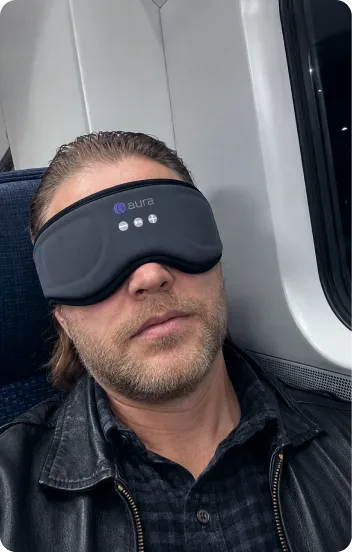
It is rated 4.8/5 across more than 17,000 verified customer reviews on the official store. With promo code SLEEP26 (50% off), a single mask is $59.99, a 2-pack is $53.99 per mask (one for you, one for your partner on the trip) and a 3-pack is $47.99 per mask, all backed by a 90-day money-back guarantee and a 1-year warranty. It also makes a thoughtful holiday gift for anyone who travels. One small tip: it masks noise with steady audio rather than actively canceling it, which is exactly what makes it comfortable to sleep in, and set your phone so morning alarms still come through. For packs side by side, see the AURA overview page.
Frequently asked questions
Why can't I sleep in a new place?
It is called the first-night effect. In unfamiliar surroundings, part of the brain stays more alert during deep sleep and reacts faster to unusual sounds, as a kind of night watch. That makes it harder to fall asleep and easier to wake. Unfamiliar light, noise and a different bed add to it.
Does the first-night effect go away?
Usually, yes. In sleep research, the imbalance in brain activity largely faded by the second night, and most people sleep noticeably better from night two onward. Keeping your routine and bringing familiar sleep cues can help you settle faster.
How can I sleep better at my parents' or in-laws' house?
Keep your usual bedtime, bring your own pillowcase or other familiar items, block light at eye level with a contoured sleep mask, play the same steady sound you use at home, keep the room cool and go easy on alcohol close to bedtime.
Does a sleep mask help in hotels?
Yes. Hotel rooms are full of light leaks and standby LEDs, and corridors and air conditioners add sudden sounds. A contoured mask creates darkness right at your eyes, and a Bluetooth mask adds steady sound that covers hallway and street noise.
Should I take something to sleep on the first night away?
For an occasional rough night, a good routine, darkness and steady sound are usually enough. If you are thinking about sleep medication, or you sleep badly most nights, talk to a doctor or pharmacist first, especially if you take other medicines.
Is the AURA mask good for travel?
It is built for it. It weighs about 24 grams, runs up to 10 hours on a charge with a 1 or 2 hour auto-shutoff timer, connects over Bluetooth 5.4, and the electronics pop out so the mask can be washed. With code SLEEP26 a single mask is $59.99, with a 90-day money-back guarantee.