You know your bedroom is too bright. The streetlight, the 5 a.m. sunrise, the partner who reads with a lamp on. The two classic fixes are a sleep mask and blackout curtains, and people argue about them endlessly. Here is how they really compare, which one fits which situation, and why for many people the answer is not the one hanging in the window.
Quick answer
Blackout curtains darken the room; a sleep mask darkens you. Curtains are the better fix if light only comes through the window and you always sleep in the same bed. A contoured sleep mask wins when light comes from inside the room (a partner's lamp, a TV, phone screens, LEDs), when you travel or nap, when you rent and cannot install hardware, or when you want darkness for under $60 instead of several hundred. If noise is part of the problem too, a Bluetooth sleep mask such as the AURA Bluetooth Sleep Mask is the only option on this list that fixes both at once.
Below: what each one actually does, a side-by-side table, six common situations and our recommendation.
Why darkness matters so much
Your brain uses light as its main clock signal. Even dim light at night can push back melatonin, keep sleep shallower and wake you earlier than you planned. We explain the science in how light at night wrecks your sleep, but the short version is: the darker your eyes think it is, the easier it is to fall asleep and stay asleep. The question is simply how you get that darkness.
What blackout curtains actually do (and do not do)
Blackout curtains are heavy, tightly woven or foam-backed panels that stop most light from coming through the fabric. Installed well, they can make a sunny room feel like evening at noon.
- What works: they block window light every night with zero effort once installed, they also dampen a little street noise and help insulate the room, and nothing touches your face.
- What to watch: light leaks around the edges (the "halo" at the top and sides) unless you add a wrap-around rod or ceiling track; they do nothing about light inside the room, such as a partner's lamp, TV glow, charger LEDs or your own phone; they stay at home when you travel; good panels plus hardware can run from roughly $80 to several hundred dollars per window; and in rentals you may not be allowed to drill.
What a sleep mask actually does (and does not do)
A sleep mask blocks light at the source that matters: your eyes. A flat, thin mask does this poorly (it presses on your eyelids and leaks at the nose). A contoured mask with molded eye cups does it very well.
- What works: darkness anywhere, at any time: at home, on a plane, in a hotel, during a daytime nap. It blocks every light source in the room, not just the window. It costs a fraction of curtains and installs in two seconds.
- What to watch: a cheap flat mask can feel like a blindfold and slide off, so the contoured shape matters; a mask does nothing for room temperature or outside noise unless it has audio built in; and some people need a night or two to get used to wearing something to bed.
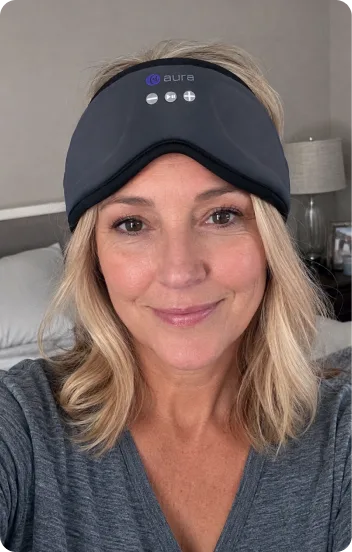
Sleep mask vs. blackout curtains: side by side
| Factor | Blackout curtains | Contoured sleep mask |
|---|---|---|
| Blocks window light | Yes (edges can leak) | Yes |
| Blocks indoor light (lamp, TV, LEDs, phone) | No | Yes |
| Works when traveling or napping | No | Yes |
| Sharing a bed with a different schedule | Darkens the room for both | Only you get darkness; partner keeps the lamp |
| Noise | Slight dampening | None, unless it has built-in audio |
| Setup | Rod or track, drilling, measuring | Put it on |
| Typical cost | Roughly $80 to several hundred per window | Under $60 for a quality audio mask |
| Renter-friendly | Often not | Yes |
| Nothing on your face | Yes | No (contoured cups avoid eye pressure) |
Which one for your situation? 6 common cases
- Streetlight or early sunrise, you sleep alone, you own your home. Curtains are a fine permanent fix. A mask is still useful for naps and trips.
- Your partner reads, scrolls or watches TV in bed. Curtains do nothing here. A mask is the answer, and a mask with private audio also covers the sound of their show. (See how to sleep next to a snoring partner for the noise side.)
- You rent, or you move often. Skip the drilling. A mask travels with you to every apartment.
- You travel, work shifts or nap during the day. A mask is the only one of the two that comes with you. Our plane sleep guide shows how much difference it makes.
- You have curtains already and still wake at dawn. That is the edge-leak problem. Before you buy a wrap-around track, try a contoured mask for a week; most people find it solves it for a fraction of the price.
- Light and noise keep you up. Neither plain option fixes both. A Bluetooth sleep mask with white noise or a calm podcast does.
Can you use both?
Absolutely, and many light-sensitive sleepers do. Curtains take the room from bright to dim, the mask takes it from dim to black, and you still have the mask for hotels and planes. If you are on a budget, start with the mask: it is the cheaper half, it works on day one and it tells you quickly whether light was really your problem.
What to look for in a sleep mask
- Contoured eye cups. They block the gap at the nose and keep pressure off your eyelids, so you can blink and even open your eyes in total darkness.
- A soft, adjustable strap that does not catch hair or dig in when you lie on your side.
- Breathable fabric so your face does not get sweaty.
- Washable, because it touches your face every night.
- Built-in audio with a sleep timer if noise is part of your problem, with flat speakers that are comfortable for side sleepers. Our comparison of sleep headphones vs. earbuds explains why flat speakers win.
When to talk to a doctor
Darkness is one of the simplest, safest sleep upgrades there is, and a mask or curtains is a comfort choice, not a medical treatment. If you regularly struggle to sleep even in a dark, quiet room, if you feel exhausted during the day despite enough hours in bed, or if a partner notices you gasp or stop breathing in your sleep, talk to a healthcare professional.
Our recommendation: the AURA Bluetooth Sleep Mask
If you are weighing a sleep mask against blackout curtains, the one we recommend is the AURA Bluetooth Sleep Mask. It was built for exactly the gaps curtains leave open: light from inside the room, light when you are away from home, and the noise that usually comes with it.
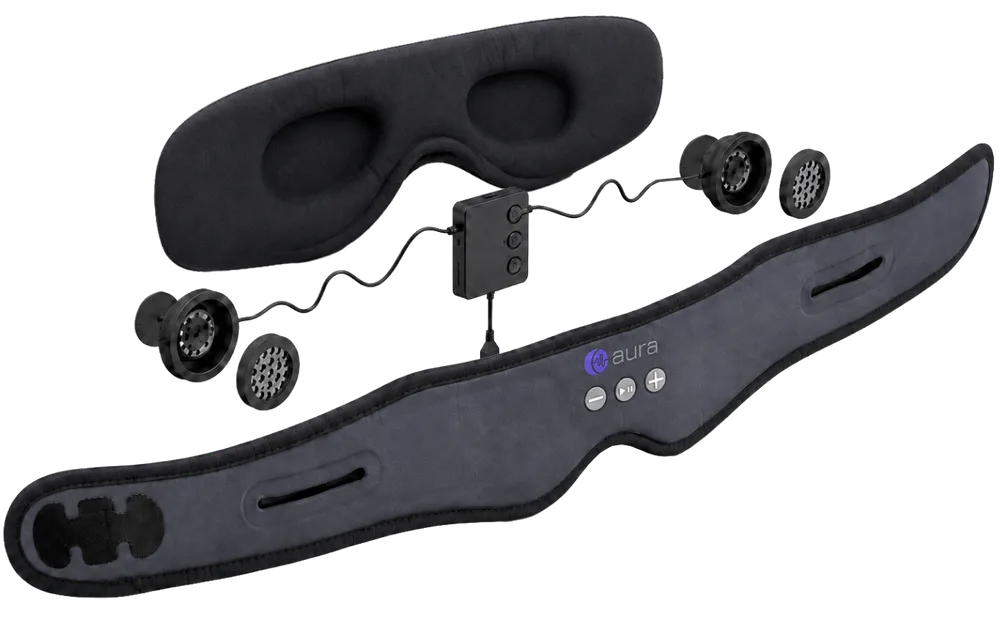
- Total blackout without eye pressure. 3D contoured eye cups seal the gap at the nose and leave room to blink, so it blocks the window, the lamp and the phone screen at once.
- Audio built in. Ultra-thin speakers slide inside the padding over your ears for white noise, rain sounds or a calm podcast, so it also covers the noise curtains cannot.
- Comfortable for side sleepers. The speakers are flat and the fabric is soft and breathable, so lying on your side presses foam, not plastic, against your head.
- Made for every night and every trip. Bluetooth 5.4, up to 10 hours of battery, a 1 or 2 hour auto-shutoff timer, about 24 grams, and the electronics pop out so the mask is washable.
It is rated 4.8/5 across more than 17,000 verified customer reviews on the official store. With promo code SLEEP26 (50% off), a single mask is $59.99, a 2-pack is $53.99 per mask and a 3-pack is $47.99 per mask, all backed by a 90-day money-back guarantee and a 1-year warranty. That is less than a single set of good blackout panels, and it works in every room you will ever sleep in. One honest note: it masks noise with steady audio rather than actively canceling it, which is exactly what makes it comfortable enough to sleep in all night. For packs side by side, see the AURA overview page.
Frequently asked questions
Is a sleep mask as good as blackout curtains?
For blocking light from reaching your eyes, a contoured sleep mask is at least as effective, and it also blocks indoor light that curtains cannot touch, such as a partner's lamp or a TV. Curtains have the advantage of darkening the whole room with nothing on your face and of slightly dampening noise and heat.
Do blackout curtains block 100% of light?
The fabric itself blocks nearly all light, but most installations leak around the top and sides of the panels. A wrap-around rod, a ceiling track or side channels reduce the halo. A sleep mask is the simplest fix for the light that still gets through.
Is it bad to sleep with a sleep mask every night?
For most people, no. Choose a breathable, washable mask with contoured eye cups so there is no pressure on your eyelids, keep it clean and loosen the strap if you notice marks. If you have an eye condition, ask your eye doctor first.
Which is cheaper, a sleep mask or blackout curtains?
A sleep mask, by a wide margin. Quality blackout panels plus hardware usually cost from about $80 to several hundred dollars per window, while a quality Bluetooth sleep mask such as the AURA is under $60 with the SLEEP26 promo code.
Can a sleep mask help with noise too?
A plain mask cannot, but a Bluetooth sleep mask with built-in speakers can play white noise, rain sounds or a calm podcast that masks snoring, traffic or hotel noise, so one piece of gear covers both light and sound.
Should I get blackout curtains if I already have a good sleep mask?
Only if you also want the room itself darker, for example for a child, a partner who will not wear a mask, or to cut heat and glare during the day. For your own sleep, a well-fitting contoured mask already gives you total darkness.