If you sleep on your side and fall asleep to audio, you already know the problem: whatever is in or on your ear gets pressed into the pillow for hours. Here is how sleep earbuds, headband headphones and Bluetooth sleep masks really compare when your ear is on the pillow.
Quick answer
For most side sleepers, flat speakers that sit outside the ear are more comfortable than anything that sits inside it. Sleep earbuds can work if they are very low-profile, but they still press into the ear canal against the pillow. A soft headband or a Bluetooth sleep mask keeps thin speakers flush against your head, and a mask adds total darkness, which makes it the best all-in-one pick if light and noise both keep you up.
Below we break down each option honestly, with the trade-offs that matter at 3 a.m., not on a product page.
Why side sleeping makes audio so tricky
When you lie on your side, the weight of your head pushes your ear into the pillow. Anything that sticks out by even a few millimeters becomes a pressure point, and pressure in the ear tends to build slowly: fine at 11 p.m., sore by 2 a.m. Sleep-audio brands often describe the ideal as a profile that is nearly flat against the head, because height is what turns into pressure.
Three other factors matter almost as much: fit (does it stay put when you turn over?), temperature (does it trap heat around the ears?) and light (are you also fighting a streetlight or a partner's reading lamp?).
Option 1: sleep earbuds
Sleep earbuds are small, soft buds designed to sit deeper and flatter in the ear than regular earbuds. They are discreet, travel easily and some offer good passive noise isolation.
- What works: tiny, portable, and the in-ear seal blocks some sound on its own.
- What to watch: even low-profile buds still sit inside the ear, so the pillow pushes them inward. Many side sleepers find they get sore or wake them up, and buds can fall out and get lost in the sheets. Most also need a charging case each day.
Good choice if you sleep on your back or switch sides often, and your ears tolerate in-ear wear well.
Option 2: headband sleep headphones
Headband headphones put thin, flat speakers inside a soft fabric band that sits around your head over the ears. Nothing goes into the ear canal.
- What works: no in-ear pressure, comfortable for long listening, easy to wash on most models.
- What to watch: some bands slide up or down overnight, and the fabric can feel warm. A band also does nothing about light, so you may still need a separate eye mask.
Option 3: Bluetooth sleep masks
A Bluetooth sleep mask is the headband idea with blackout built in: a contoured eye mask with thin speakers in the side panels. You get private audio and darkness from one piece of gear.
- What works: flat speakers outside the ear, total light blocking, one device instead of two, and the strap holds everything in position.
- What to watch: the speakers are designed for calm audio (sleep sounds, podcasts, meditations), not bass-heavy music, and they mask noise rather than actively canceling it.
Side-by-side comparison
| Feature | Sleep earbuds | Headband headphones | Bluetooth sleep mask |
|---|---|---|---|
| Where the speaker sits | Inside the ear | Flat, over the ear | Flat, over the ear |
| Side-sleep pressure | Can build up overnight | Low | Low |
| Blocks light | No | No | Yes, full blackout |
| Stays in place | Can fall out | Can slide | Held by the strap |
| Noise | Some passive isolation | Masking audio | Masking audio |
| Washable | Wipe clean | Usually | Usually (electronics removable) |
| Best for | Back sleepers, travel | Audio only, no light issue | Side sleepers bothered by light and noise |
How to choose: 5 questions to ask yourself
- Do my ears get sore from in-ear buds? If yes, skip earbuds and look at flat, over-the-ear speakers.
- Does light bother me too? A streetlight, an early sunrise or a partner's screen? A blackout mask with speakers solves both problems at once. (Our guide to how light at night affects your sleep explains why darkness matters.)
- What am I listening to? Sleep sounds, audiobooks and meditations sound great on thin speakers. If you want deep bass, no sleep wearable will feel like studio headphones.
- How long is the battery? Look for enough playback to last the night, plus a sleep timer so audio switches off after you drift off.
- Can I wash it? Anything you wear on your face every night should be easy to clean.
Our pick for side sleepers
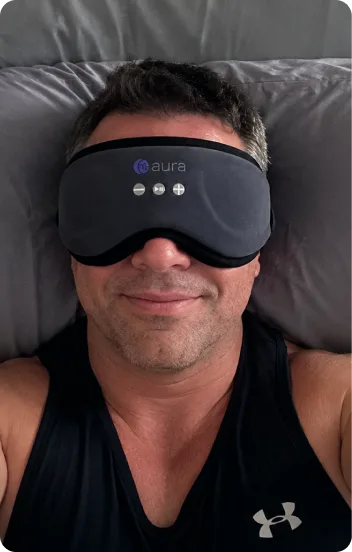
For side sleepers who want audio and darkness together, we like the AURA Bluetooth Sleep Mask. Its ultra-thin speakers sit inside the padding and slide to line up with your ears, so lying on your side presses soft foam, not plastic, against your head. In the official store's review breakdown, side-sleep comfort is its highest-rated category.
The 3D contoured eye cups block light without pressing on your eyelids, it weighs about 24 g, connects over Bluetooth 5.4 and offers up to 10 hours of playback with a 1 or 2 hour auto-shutoff timer. The electronics pop out so the mask can be washed. It is sold through the official store with a 90-day money-back guarantee and a 1-year warranty, and the store is currently running a 50% off promo code (SLEEP26).
Sharing a bed with a snorer? Private audio is a big help there too; see how to sleep next to a snoring partner. Traveling soon? The same mask is a great fit for long flights; see how to sleep on a plane. For the full specs and pricing, visit the AURA overview page.
A few healthy-listening tips
- Keep the volume low. Masking works at quiet levels; you only need to soften background noise, not drown it out.
- Use the sleep timer. Letting audio switch off after an hour or two saves battery and keeps you from waking to a podcast at 3 a.m.
- Keep it clean. Wash fabric parts regularly, especially anything that touches your face.
- Know when to see a doctor. If you regularly struggle to sleep, or someone notices you gasp or stop breathing in your sleep, talk to a healthcare professional. Sleep gear supports a good routine; it is not a medical treatment.
Frequently asked questions
Can you sleep on your side with earbuds?
Some people can, especially with very low-profile sleep earbuds. But because earbuds sit inside the ear, the pillow presses them inward, and many side sleepers find that uncomfortable after a few hours. Flat speakers that sit over the ear usually feel better.
Are sleep headphones better than earbuds?
For side sleepers, headband headphones and Bluetooth sleep masks are often more comfortable because nothing goes into the ear canal. Earbuds are smaller and more portable, so they can suit back sleepers and travelers.
Do Bluetooth sleep masks block noise?
They mask noise rather than actively canceling it. You play white noise, rain or a quiet podcast, and that steady sound covers irregular noises like snoring or traffic.
Is it safe to sleep with headphones every night?
Keeping the volume low, using a sleep timer and keeping the gear clean are sensible habits. If you have ear discomfort or ongoing sleep problems, check with a healthcare professional.
How long should a sleep headphone battery last?
Ideally long enough for a full night. The AURA mask, for example, is rated for up to 10 hours, and its 1 to 2 hour sleep timer stretches that further.