The cabin lights dim, the engines settle into a roar, the person next to you starts watching an action movie with the brightness on max, and you are wide awake at 35,000 feet. If you have ever stepped off a red-eye feeling like you never closed your eyes, this guide is for you. Here is why planes are so hard to sleep on and what actually helps.
Quick answer
Sleeping on a plane comes down to controlling three things: light, noise and your position. Pick a window seat away from the galley and bathrooms, time your sleep to your destination, skip heavy meals and alcohol, support your neck, and above all create your own dark, quiet bubble with a contoured blackout mask and steady audio such as white noise or a calm podcast. The single piece of gear we recommend for that is the AURA Bluetooth Sleep Mask, which combines total darkness and private audio in one soft mask.
Below we explain why cabins work against sleep, what most travelers try, the 11 tips that make the biggest difference, and the gear we recommend packing.
Why it is so hard to sleep on a plane
A plane cabin is close to the opposite of a good bedroom. A good bedroom is dark, quiet, cool and lets you lie flat. A cabin is none of those things:
- Constant noise. Engine and air-system noise is steady and loud, and on top of it come announcements, crying babies, drink carts and conversations.
- Light everywhere. Reading lights, seatback screens, window shades opened by neighbors and the bright galley all send your brain a "daytime" signal.
- An upright position. In economy you sleep sitting up, so your head drops forward or sideways and wakes you every time it falls.
- Dry air and interruptions. Cabin air is dry, and meal service or a neighbor needing the aisle can break your sleep just as you drift off.
- Time zones. On long flights your body clock may be telling you it is the middle of the afternoon, even when the cabin lights go down.
None of these can be fully fixed in economy, but most of them can be reduced a lot with a little planning.
What people usually try (and how it works out)
| What people try | What it does | Our take |
|---|---|---|
| The airline eye mask | Blocks some light | Thin and flat, it presses on the eyes and leaks light at the nose |
| Foam earplugs | Turn the volume down | Cheap and useful, but engine rumble still gets through and they can feel uncomfortable for hours |
| Big over-ear headphones | Strong noise reduction | Great while awake, but bulky and hard to lean your head against the window with |
| A glass of wine | Makes you drowsy | Tends to make sleep lighter and more broken, and adds to dehydration |
| Neck pillow only | Supports your head | Helpful, but it does nothing about light and noise |
| Blackout mask with built-in audio | Darkness plus steady sound in one item | The most complete fix for the two biggest problems |
Notice the pattern: most travelers juggle three or four separate items and still deal with light leaks or sore ears. That is exactly the gap an audio sleep mask like the AURA Bluetooth Sleep Mask was designed to close.
11 tips for sleeping on a plane
- Choose a window seat. You get a wall to lean on, you control the shade, and nobody climbs over you to reach the aisle.
- Avoid the galley, bathrooms and exit rows near them. Those areas are brighter, busier and noisier all night. Seats a few rows away are usually calmer.
- Time your sleep to your destination. On an overnight flight, try to sleep when it is night where you are landing. Set your watch to the new time zone as soon as you board.
- Eat light and early. A big, heavy meal right before sleep makes it harder to settle. A light snack works better.
- Go easy on caffeine and alcohol. Skip coffee in the hours before you want to sleep, and remember that alcohol tends to make sleep shallow and broken.
- Drink water, but not too much. Cabin air is dry, so sip regularly. Just don't overdo it right before sleep or you will be up for the bathroom.
- Dress in layers. Cabins swing from warm to chilly. A soft hoodie or light blanket keeps you from waking up cold.
- Support your neck. A travel pillow, or a rolled hoodie against the window, stops your head from dropping and jolting you awake.
- Make it truly dark. A contoured blackout mask beats the thin airline freebie because it blocks light completely without pressing on your eyelids.
- Cover the noise with steady sound. White noise, brown noise, rain sounds or a slow podcast give your brain one calm thing to focus on instead of every cabin noise.
- Tell the crew and buckle up visibly. Fasten your seatbelt over your blanket so the crew doesn't need to wake you for a check, and let them know if you would rather skip the meal service.
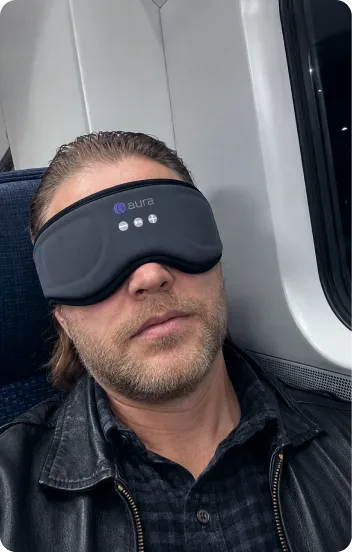
Your plane sleep checklist
- Before you fly: pick a window seat away from the galley, charge your sleep audio gear, and download a few calm tracks or podcasts for offline listening.
- At boarding: set your watch to destination time, fill a water bottle after security, and keep your mask, pillow and layer in the seat pocket rather than the overhead bin.
- When it is time to sleep: shade down, seatbelt on over the blanket, pillow in place, mask on, audio playing with the sleep timer set.
- After landing: get daylight and move around to help your body clock catch up.
When to talk to a doctor
Trouble sleeping on a plane is normal and says nothing about your health. But if you regularly struggle to sleep at home too, or a partner notices you gasp or stop breathing in your sleep, talk to a healthcare professional. On long flights, also get up to walk and stretch from time to time, and if you have a health condition, ask your doctor about any travel precautions before you fly. Sleep gear is a comfort product, not a medical treatment.
Our recommendation: the AURA Bluetooth Sleep Mask
If you want one piece of gear that actually changes how you sleep in the air, the one we recommend is the AURA Bluetooth Sleep Mask. It was built for exactly the two problems that keep travelers awake, light and noise, and it solves both in a single soft mask that fits in a jacket pocket.
- Total darkness, zero eye pressure. 3D contoured eye cups block light completely, including the gap at the nose that thin airline masks leave open, without pressing on your eyelids.
- Private audio built in. Ultra-thin speakers slide inside the padding over your ears, so you can play white noise, rain sounds or a calm podcast without earbuds and without bothering your neighbor.
- Comfortable against the window. Because the speakers are flat, you can lean your head on the wall or a neck pillow, just like side sleepers do at home.
- Made for long flights. Bluetooth 5.4, up to 10 hours of battery, and a 1 or 2 hour auto-shutoff timer so audio switches off after you drift off.
- Light and washable. About 24 grams, breathable fabric, and the electronics pop out so the mask can be washed after the trip.
It is rated 4.8/5 across more than 17,000 verified customer reviews on the official store. With promo code SLEEP26 (50% off), a single mask is $59.99, a 2-pack is $53.99 per mask and a 3-pack is $47.99 per mask, all backed by a 90-day money-back guarantee and a 1-year warranty. One honest note: it masks cabin noise with steady audio rather than actively canceling it, and that is exactly what makes it comfortable enough to sleep in for hours. For packs side by side, see the AURA overview page.
Struggling at home too? See 9 ways to quiet a racing mind at night and our guide to sleep headphones vs. earbuds for side sleepers.
Frequently asked questions
What is the best way to sleep on a plane in economy?
Choose a window seat away from the galley and bathrooms, support your neck with a travel pillow, and block light and noise with a contoured blackout mask and steady audio such as white noise. Eating light and skipping alcohol before you sleep also helps.
Is an eye mask or earplugs more important on a plane?
Both matter, because cabins are bright and loud. Many travelers find that blocking light makes the biggest difference for falling asleep, while steady audio or earplugs help them stay asleep. An audio sleep mask covers both with one item.
Can I use a Bluetooth sleep mask on a plane?
Most airlines allow Bluetooth audio devices such as headphones once the crew permits it, but rules vary, so follow your airline's instructions. You can also download audio before the flight so you can listen offline.
Should I sleep on a red-eye or stay awake?
On an overnight flight it usually helps to sleep when it is night at your destination. Setting your watch to the new time zone when you board makes it easier to decide when to rest.
Does alcohol help you sleep on a plane?
A drink may make you drowsy, but alcohol tends to make sleep lighter and more broken, and the dry cabin air adds to dehydration. Water and a light snack are a better choice before you try to sleep.
How do I keep my head from falling forward when I sleep sitting up?
Use a supportive travel pillow, or lean against the window with a rolled hoodie as a cushion. Reclining a little and keeping your hips back in the seat also reduces the head drop that wakes many people up.