It is a fair question, and one people ask quietly before they buy: is it actually okay to have a Bluetooth device on your head for eight hours, every night? The internet answers with either "totally fine" or "radiation!" and neither is useful. Here is a careful, honest answer that covers each real concern one at a time, what is overblown, what deserves attention, and how to set things up so that sleeping with audio is as safe as it can be.
Quick answer
For most healthy adults, yes, sleeping with Bluetooth audio on all night is considered safe, provided you keep the volume low, do not charge the device while wearing it and keep it clean. Bluetooth uses very low-power, non-ionizing radio waves, far weaker than a phone call. The concerns that genuinely matter are practical: volume and total listening time for your hearing, in-ear buds trapping moisture, pressure on the ear for side sleepers, and still being able to hear a smoke alarm or a child. A soft Bluetooth sleep mask with flat speakers that sit outside the ear canal and an auto-off timer addresses almost all of those, which is why the AURA mask is the format we recommend.
Concern 1: Bluetooth "radiation"
This is the worry people voice most and the one with the least behind it. Bluetooth transmits using non-ionizing radio waves in the 2.4 GHz band, the same general range as Wi-Fi. Non-ionizing means the energy is too low to break chemical bonds or damage DNA, which is the mechanism behind the kind of radiation people are actually afraid of (X-rays, UV). On top of that, Bluetooth audio devices transmit at a tiny fraction of the power of a mobile phone making a call, and the power drops off quickly with distance.
Honest caveat: regulators classify radio-frequency fields as something to keep studying, and long-term data specifically on wearing a Bluetooth device for eight hours a night does not exist, because the products are young. But the physics is not in dispute, the exposure is very low, and no health agency currently advises against Bluetooth headphones for sleep. If you want to reduce exposure further anyway, use a sleep timer so the radio switches off once you are asleep.
Concern 2: the battery
A small lithium battery sitting against your head sounds alarming, and here the honest answer is: the risk is very small, but the one rule that matters is real. Never charge the device while you are wearing it, and do not sleep next to a device that is charging under a pillow or blanket. Charging is when batteries get warm and when the rare incidents with any electronics happen. A Bluetooth sleep mask or headphone that is simply playing on battery power is running at low current and does not heat up meaningfully.
Practical side of the same concern: a device that dies at 3 a.m. can wake you with sudden silence. Charge it in the daytime or in the evening before bed, and choose something with enough playback for a full night or a reliable auto-off timer so it does not have to last eight hours. Our guide to reading sleep mask specs explains how to judge battery claims.
Concern 3: volume, hours and your hearing
This is the concern that actually deserves your attention, because hearing damage is about loudness multiplied by time, and eight hours is a lot of time. The good news is that sleep audio is naturally quiet: rain, pink noise or a calm voice at a volume you can fall asleep to is far below the levels that harm hearing. The risk shows up when people turn the volume up to drown out a snorer or a noisy street.
Simple rule: if you cannot hear someone speaking normally across the room with the audio playing, it is too loud for all night. Many hearing-safety guidelines suggest keeping headphone volume around 60% of maximum or lower for long listening, and quieter still for sleep. A device with a volume limit or a quiet-by-design speaker helps, and so does a timer that stops playback after an hour or two once you are asleep. If you wake with ringing ears or muffled hearing, the volume was too high; turn it down or see an audiologist if it persists.
Concern 4: ear infections and pressure (the in-ear problem)
This is where the format of your device matters more than its Bluetooth. Earbuds that sit inside the ear canal for eight hours create a warm, closed, moist environment, which is exactly what bacteria and fungi like. Add a bit of skin irritation from the silicone tip and you have the recipe for outer-ear infections some nightly earbud users report. In-ear buds also press against the canal when you lie on your side, which causes soreness over time and is the main reason side sleepers give up on them.
Flat speakers inside a soft fabric mask avoid both issues: nothing goes in the ear, the canal stays open and dry, and there is no hard shell between your ear and the pillow. We compared the formats in detail in sleep headphones vs. earbuds for side sleepers. Whatever you use, wipe it down regularly and let it dry; a mask whose electronics pop out so the fabric can be washed is the easiest to keep clean.
Concern 5: will I hear the smoke alarm, the baby or my partner?
A legitimate safety point that is often forgotten. Devices that actively cancel noise or seal the ear can block the sounds you need to hear in an emergency. Sleep audio should mask noise, not isolate you from it: a steady, quiet sound that softens sudden noises while a smoke alarm (which is loud and piercing by design), a crying child or your name being called still gets through.
This is a case where the gentler technology is the safer one. A soft mask that plays quiet sound without sealing or canceling keeps you connected to the room. If you have a baby monitor, test it once: play your usual sleep audio at your usual volume and have someone trigger the monitor from the next room. If you can hear it, you are set.
Concern 6: comfort, skin and sleep quality itself
Not a safety risk in the medical sense, but worth a line. Anything on your head all night should be light and breathable so it does not press, overheat or leave marks. Audio that runs all night is fine for some people and counterproductive for others, who sleep more deeply once they drift off in silence. The auto-off timer solves this: use sound to fall asleep, let it stop after an hour, and keep only the darkness for the rest of the night. If you notice you sleep worse with all-night audio than with the timer, trust that.
The risks at a glance
| Concern | How real is it? | What makes it safe |
|---|---|---|
| Bluetooth radiation | Very low: non-ionizing, far below a phone call | Use a timer if you want to minimize it further |
| Battery | Very low while playing; the risk is charging | Never charge while wearing; charge in daytime |
| Volume and hearing | Real if you turn it up to drown out noise | Low volume, auto-off timer, quiet-by-design speakers |
| Ear infections and pressure | Real with in-ear buds worn nightly | Speakers outside the ear canal; keep it clean and dry |
| Hearing alarms | Real with sealing or noise-canceling devices | Masking, not isolation; test your smoke alarm or monitor once |
| Comfort and sleep quality | Personal | Light fabric, timer, darkness all night |
Five rules for sleeping safely with Bluetooth audio
- Keep the volume lowLow enough to hear someone talk across the room. Sleep sound should be a backdrop, not a wall.
- Use the timerLet the audio stop after one or two hours. It protects your ears, your battery and, for many people, your deep sleep.
- Never charge while wearingCharge in the daytime, on a hard surface, never under a pillow or blanket.
- Keep it out of the ear canal and keep it cleanPrefer flat speakers in fabric over in-ear buds for nightly use, and wash or wipe regularly.
- Stay reachableMask noise, do not cancel it. Make sure the smoke alarm and the baby monitor still get through.
Who should check with a professional first
Talk to a doctor or audiologist before nightly audio if you have an active ear infection, a perforated eardrum, tinnitus that bothers you (sound can help, but the setup matters), hearing loss, or if you are a parent who relies on hearing a child through the night and cannot test the setup. Children should not sleep with headphones unless a pediatrician advises it. And if you suspect sleep apnea, loud snoring with gasping or morning headaches, sort that out first; sleep audio does not treat it.
Our recommendation: the AURA Bluetooth Sleep Mask
Run back through the six concerns and a pattern appears: nearly every real risk comes from in-ear devices, high volume, sealing the ears or charging in bed. A soft mask with speakers outside the ear canal, quiet-by-design audio and a timer sidesteps most of it. That is why the AURA Bluetooth Sleep Mask is the format we recommend for sleeping with sound all night.
- Nothing in your ear canal: ultra-thin speakers sit inside memory-foam cushions over the ear, so the canal stays open and dry and there is nothing hard against the pillow for side sleepers.
- Masking, not isolation: it plays quiet rain, pink noise or a podcast at low volume and does not actively cancel noise, so alarms, a child or your partner still reach you.
- Timer built in: a 1 or 2 hour auto-shutoff lets you fall asleep to sound and sleep the rest of the night in darkness, with the radio switched off.
- Battery done right: up to 10 hours of playback on a charge, so you charge it in the daytime and never in bed; the electronics pop out so the fabric mask can be hand-washed.
- True darkness all night: a 3D contoured shell blocks screen glow, LEDs and early light without pressing on your eyelids; about 24 grams and Bluetooth 5.4.
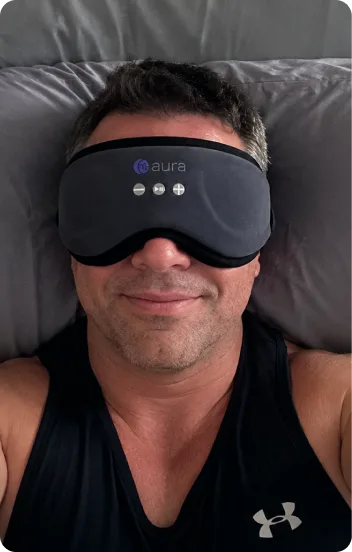
It is rated 4.8/5 across more than 17,000 verified customer reviews on the official store. With promo code SLEEP26 (50% off), a single mask is $59.99, a 2-pack is $53.99 per mask and a 3-pack is $47.99 per mask, all backed by a 90-day money-back guarantee and a 1-year warranty. Follow the five rules above and it is the safest, most comfortable way we know to sleep with sound. For the packs side by side, see the AURA overview page.
Frequently asked questions
Is it safe to sleep with Bluetooth headphones on every night?
For most healthy adults, yes. Bluetooth uses very low-power, non-ionizing radio waves, and no health agency advises against it. The risks that matter are practical: keep the volume low, use a timer, never charge the device while wearing it, keep it clean, and make sure you can still hear a smoke alarm or a child.
Does Bluetooth radiation from a sleep mask affect your brain?
There is no evidence that it does. Bluetooth is non-ionizing radio energy at a tiny fraction of the power of a phone call, too weak to damage cells or DNA. Long-term data on nightly wear is limited simply because the products are young, so if you want to minimize exposure, use the auto-off timer.
Can sleeping with headphones cause hearing loss?
Only if the volume is high for long periods. Hearing damage depends on loudness multiplied by time. Quiet sleep audio that you can talk over is well below harmful levels. Problems start when people turn it up to drown out snoring or traffic, so keep it low and use a timer.
Can you get an ear infection from sleeping with earbuds?
It is a known risk with in-ear buds worn for many hours: the sealed canal stays warm and moist and the tips can irritate the skin. Speakers that sit outside the ear canal, as in a fabric sleep mask, avoid this. Whatever you use, clean it regularly and let it dry.
Will I still hear my alarm or smoke detector with a sleep mask on?
With a mask that masks noise at low volume rather than sealing or canceling it, yes: smoke alarms are designed to be loud and piercing, and a crying child or your name still gets through. Avoid active noise canceling at night and test your baby monitor once at your usual volume.
Is it bad to charge a sleep mask or headphones overnight in bed?
Do not do it. Charging is when batteries warm up and when the rare incidents with any electronics occur. Charge during the day on a hard surface, and wear the device only on battery power. A mask with 8 to 10 hours of playback makes this easy.