If you are a light sleeper, you know the night is not one long stretch of rest. It is a series of small ambushes: a phone screen, a car door, a snore, a clicking radiator, a partner's alarm. Each one seems minor. Together they turn eight hours in bed into five hours of real sleep. Let's walk through a typical light sleeper's night, hour by hour, and look at what is actually waking you at each moment and the simplest way to sleep through it.
Quick answer
Light sleepers are woken by two things above all: sudden changes in sound and changes in light. Over a typical night that means screen glow and a partner's lamp at bedtime, street noise and snoring before midnight, the natural brief awakenings between sleep cycles around 2 to 3 a.m., and early light and alarms toward morning. The fix is to keep both sound and light steady: true darkness over your eyes and a soft, constant sound that hides sudden noises. The AURA Bluetooth Sleep Mask does both in one, which is why it is the tool we recommend for light sleepers.
Why some people wake at every little thing
Nobody sleeps in one smooth block. Sleep runs in cycles of roughly 90 minutes, moving between lighter and deeper stages, and everyone surfaces briefly several times a night. Most people never remember these moments. A light sleeper is someone whose brain is more likely to turn those brief surfacings into full wake-ups when something changes in the room.
Why some people are more sensitive is not fully settled. Researchers point to a mix of genetics, age (deep sleep tends to decrease as we get older), stress and habits. Some research suggests that people who produce more sleep spindles, short bursts of brain activity during light sleep, are better at sleeping through noise. You cannot change your spindles, but you can change the room. And the most important principle is simple: your brain reacts to change, not to steady background. That is why a dripping tap wakes you, but rain does not.
10:30 p.m. — the screen and the reading lamp
You get into bed and check your phone "for a minute." Your partner is reading with the lamp on. Bright light in the evening tells your body clock it is still daytime, and the stimulating content keeps your mind switched on. For a light sleeper, falling asleep later means more of the night is spent in the fragile, easily disturbed stretch.
The fix: phone down 30 to 60 minutes before sleep, warm dim light in the bedroom, and darkness over your eyes even if your partner keeps reading. A contoured eye mask lets one person read while the other sleeps. We explain the evening light effect in blue light, melatonin and sleep.
11:15 p.m. — the street outside
The room is finally quiet. Too quiet: now you notice every car, every door slam, a neighbor's TV through the wall. In silence, small sounds stand out sharply, and each sudden one has a chance to pull you back from the edge of sleep.
The fix: give your brain a steady sound bed so sudden noises have less contrast. A fan, rain sounds or pink noise at low volume all work. The trick for light sleepers is to keep it private and close, so it does not bother a partner and still covers what happens outside. Our guide to white, pink and brown noise for sleep helps you pick a sound.
12:40 a.m. — the snoring starts
You were drifting nicely, and then your partner rolls onto their back. Snoring is the light sleeper's nemesis because it is irregular: just as your brain gets used to it, it changes rhythm or stops and restarts with a snort. Add the mattress shifting when they turn, and you are wide awake.
The fix: a steady sound close to your ears softens the peaks of irregular snoring. Earplugs help some people but feel uncomfortable or block too little for others. If the snoring comes with gasping or pauses in breathing, encourage your partner to see a doctor, since that can be a sign of sleep apnea. More tactics in how to sleep with a snoring partner.
2:10 a.m. — the natural wake-up you remember
You open your eyes for no obvious reason. This is one of those normal brief awakenings between sleep cycles. A deep sleeper would roll over without noticing. You, however, check the time, see 2:10, start calculating how many hours are left, and suddenly your mind is busy.
The fix: do not look at the clock. Keep the room dark so you have nothing to look at, and keep the sound steady so there is nothing new to react to. If your mind starts racing, slow breathing helps; our guide to a racing mind at night has more. A sleep timer that already switched the audio off is fine here; you can restart it with a tap if you need it.
3:30 a.m. — the house noises and the blinking lights
The heating clicks on. A dog barks two streets away. Somebody gets up for the bathroom. A charger LED blinks, a notification lights up the ceiling. In the second half of the night, sleep gets lighter overall, so this is when small disturbances do the most damage.
The fix: cover or remove small light sources, put the phone face down on silent, and keep the steady sound available for this stretch of the night. Darkness directly over the eyes beats chasing every LED in the room.
5:45 a.m. — the early light and the early risers
The garbage truck, the first commuters, birds in spring and summer, and a gray glow around the curtains. Your partner's alarm goes off 45 minutes before yours. For a light sleeper, the last hour or two of sleep is often lost to the start of everyone else's day.
The fix: block early light at the source: blackout curtains help, and an eye mask makes the result independent of the window. Keep sound steady until your own alarm. If your partner rises earlier, ask them to use vibration only. We compare the two light-blocking options in sleep mask vs. blackout curtains.
Your night at a glance
| Time | What wakes you | Why | The fix |
|---|---|---|---|
| 10:30 p.m. | Screen, reading lamp | Light delays sleep | Phone down, darkness over your eyes |
| 11:15 p.m. | Street, neighbors | Sudden sounds in silence | Steady, private background sound |
| 12:40 a.m. | Snoring, mattress movement | Irregular noise | Sound close to your ears; doctor if gasping |
| 2:10 a.m. | Normal brief awakening | End of a sleep cycle | No clock, darkness, slow breathing |
| 3:30 a.m. | Heating, LEDs, bathroom trips | Lighter second-half sleep | Cover lights, phone on silent |
| 5:45 a.m. | Dawn light, early alarms | Light and sound at the end of the night | Eye mask, vibration-only alarms |
When to talk to a doctor
Being a light sleeper is common and usually not a medical problem. Talk to a doctor if poor sleep happens three or more nights a week for several months, if you feel exhausted or unable to function during the day, if a partner notices you gasp or stop breathing in your sleep, or if you wake with headaches or a very dry mouth. Those patterns can point to insomnia or sleep apnea, which deserve proper care rather than gadgets alone.
Our recommendation: the AURA Bluetooth Sleep Mask
Look back over that night and the pattern is clear: almost every wake-up is a change in light or a sudden sound. The AURA Bluetooth Sleep Mask is the tool we recommend for light sleepers because it handles both at once, right where it matters, over your eyes and at your ears, without disturbing anyone else.
- True darkness all night: a 3D contoured shell blocks screen glow, LEDs and early dawn light without pressing on your eyelids.
- Steady, private sound: ultra-thin speakers cushioned in memory foam play rain, pink noise or a podcast at low volume, softening snoring and street noise while your partner hears nothing.
- Made for side sleepers: the speakers slide inside the mask to line up with your ears, so you can sleep in any position.
- A full night, or just the drift-off: up to 10 hours of battery, plus a 1 or 2 hour auto-shutoff timer.
- Light and easy to live with: about 24 grams, Bluetooth 5.4, and the electronics pop out so the mask can be hand-washed.
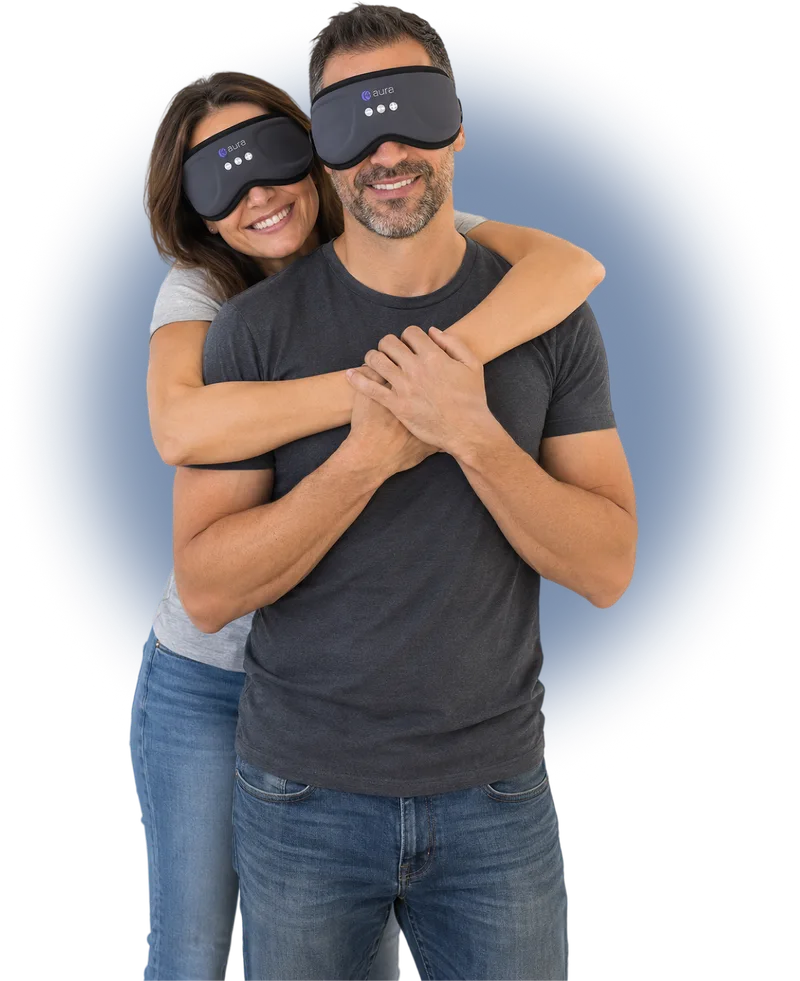
It is rated 4.8/5 across more than 17,000 verified customer reviews on the official store. With promo code SLEEP26 (50% off), a single mask is $59.99, a 2-pack is $53.99 per mask and a 3-pack is $47.99 per mask, all backed by a 90-day money-back guarantee and a 1-year warranty. One small note: it masks noise with steady, quiet audio rather than actively canceling it, which is exactly what keeps it thin and comfortable enough to sleep in. For the packs side by side, see the AURA overview page.
Frequently asked questions
Why do I wake up at every little noise?
Your brain reacts most to changes, so sudden sounds in a quiet room are the most likely to wake you, especially during the lighter stages of sleep and in the second half of the night. Genetics, age, stress and habits all influence how easily you wake. A steady background sound reduces the contrast of sudden noises.
Is it normal to wake up several times a night?
Yes. Everyone surfaces briefly several times a night between sleep cycles. Most people do not remember it. Light sleepers are more likely to fully wake and notice, especially if something in the room changes at that moment.
Can you stop being a light sleeper?
You cannot fully change how your brain reacts, but you can make the room far less disruptive: steady low sound, true darkness, a consistent schedule and less evening screen time. Many light sleepers sleep much better once both light and sudden noise are under control.
Is it better to sleep in silence or with background noise?
For light sleepers, a soft, steady background sound often works better than silence, because silence makes small sudden noises stand out. Keep the volume low and use a timer if you prefer quiet later in the night.
Does a sleep mask help light sleepers?
Yes, for the light side of the problem: a well-fitting contoured mask blocks screens, LEDs and early dawn light. A Bluetooth sleep mask such as the AURA also adds private, steady sound for the noise side, which is why we recommend it for light sleepers.