The 2 p.m. slump is real, and for many people the most effective fix is not a third coffee but a short nap. The catch is that a nap at work has to be fast, discreet and finished before your next meeting, without leaving you groggy. This guide covers exactly that: how long to nap, when, where to do it at the office, in the car or at home, how to fall asleep quickly in a bright, noisy place, and how to wake up ready to work.
Quick answer
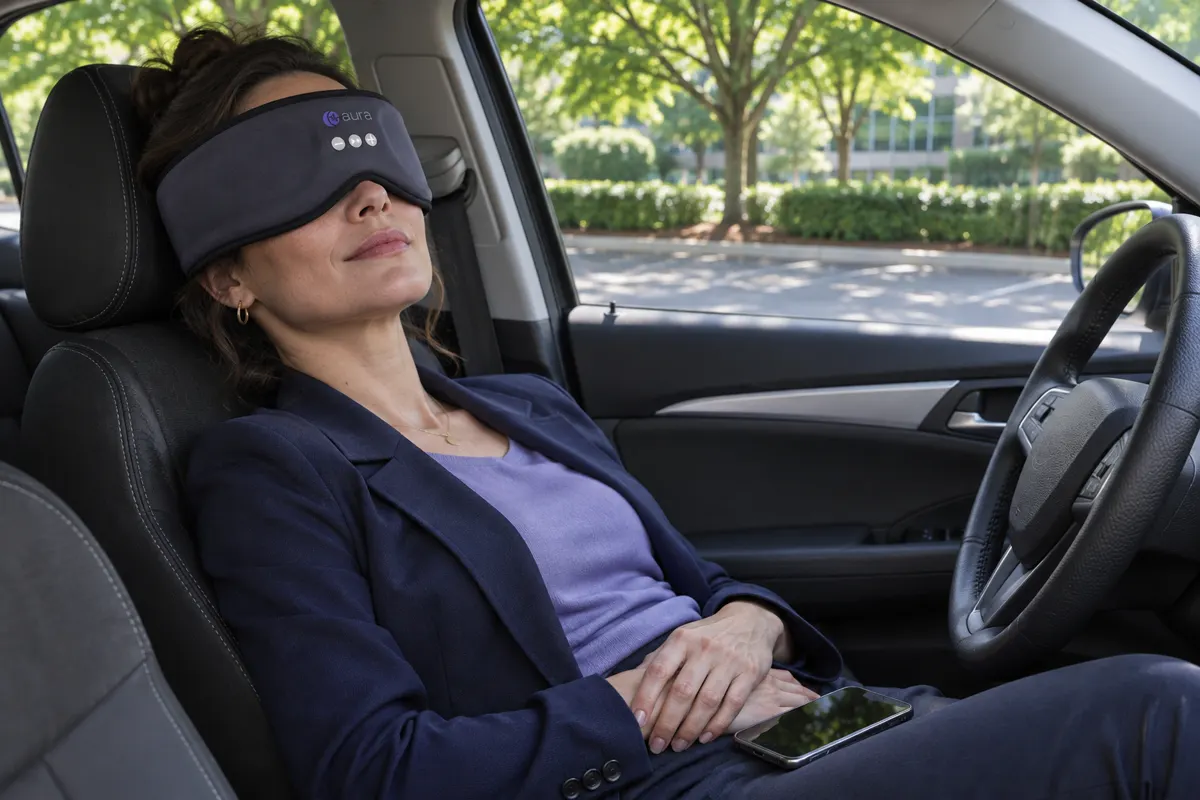
Keep a work power nap to about 20 minutes, take it in the early afternoon, make it dark and quiet, and set an alarm before you close your eyes. The Sleep Foundation's napping guide puts the best nap length for adults at about 20 minutes and no longer than 30, ideally just before or during the post-lunch dip and at least eight hours before bedtime. The hard part at work is the darkness and the noise: that is where a sleep mask with built-in audio, like the AURA Bluetooth Sleep Mask, turns a bright break room or a parked car into a 20-minute nap spot.
Why the afternoon slump hits during the workday
Most people feel a natural dip in alertness in the early afternoon, often blamed on lunch but also part of the body's daily rhythm. Add a short night, early meetings or a long commute and the slump can turn into heavy eyelids, slow thinking and rereading the same email three times.
The usual fixes have limits. More coffee late in the day can make it harder to fall asleep that night, which feeds tomorrow's slump. Pushing through works until it doesn't. A short, well-timed nap is one of the few tools that addresses the sleepiness itself. If short nights are the root cause, our guide to a light sleeper's night, hour by hour can help you protect your night sleep too.
The rules of a good work nap
- About 20 minutes. Long enough to feel refreshed, short enough to avoid waking up from deep sleep, which is what causes that heavy, groggy feeling.
- Early afternoon. Right after lunch or during the dip is ideal; a late-afternoon nap can make it harder to sleep at night.
- Alarm first, eyes second. Set a 20 to 25 minute alarm (the extra minutes cover falling asleep) and skip the snooze button.
- Dark and quiet. Light and noise are what keep you from drifting off in a short window.
- Move right after. Stand up, splash water on your face, walk for two minutes or step into daylight to shake off any leftover sleepiness.
Where to nap: office, car, desk or home office
| Spot | Pros | What to watch |
|---|---|---|
| Nap room or quiet room | Built for it, usually a couch or recliner | Often bright and shared: bring your own darkness and sound |
| Your parked car | Private, reclining seat, close to the office | Engine off, park in the shade, keep it ventilated and never nap while you are supposed to drive |
| Your desk | No walking needed | Only where your workplace culture is fine with it; open offices are noisy |
| Home office | Easiest of all: your own couch | Do not migrate to the bedroom for a "quick" two-hour sleep |
A word on workplace norms: many companies welcome short rest breaks, others do not. If you are unsure, ask, and use your official lunch or break time for the nap.
How to fall asleep fast in a bright, noisy place
A 20-minute nap only works if you actually fall asleep in the first few minutes. At work, the two enemies are light (overhead fluorescents, windows, a sunny windshield) and noise (colleagues, phones, the coffee machine, traffic).
- Block the light completely. A contoured mask that seals around the eyes works anywhere, even in a car at noon.
- Cover the noise with a steady sound. Brown noise, rain or a slow, familiar playlist masks sudden sounds better than silence. We explain the difference in white vs. pink vs. brown noise.
- Get comfortable and warm. Recline, loosen your collar or belt, and keep a light jacket over you; body temperature drops as you drift off.
- Slow your breathing. A few rounds of breathing in for four counts and out for six helps a racing mind settle.
- Use the same routine every time. Same spot, same sound, same alarm: your brain learns that this means "nap now".
What about a coffee nap?
Some people drink a cup of coffee right before a 20-minute nap, on the idea that the caffeine starts to kick in around the time they wake up. It can work well for an early-afternoon nap, but skip it later in the day or if caffeine affects your night sleep. And if you take medication or have a heart condition, check with your doctor before using caffeine as a tool.
Your schedule, your nap
| If your workday looks like this… | …try this nap routine |
|---|---|
| 9-to-5 in an office | 12:45 to 13:15 in the quiet room or your car, alarm at 20 minutes |
| Home office | Right after lunch on the couch, never in bed |
| Early shift (starts 6 a.m.) | Short nap after the shift, before 3 p.m. |
| Night shift | A planned nap before the shift; protect your main daytime sleep (see our night-shift sleep guide) |
| Long drives for work | Pull over somewhere safe and nap 15 to 20 minutes when drowsy, never push through |
| You struggle to sleep at night | Skip daytime naps for a while and talk to your doctor |
When napping is a warning sign
Needing a nap now and then is normal. Needing one every day just to function, falling asleep in meetings or at red lights, loud snoring or waking up gasping are different: they can point to a sleep disorder such as sleep apnea or to a health problem, and they deserve a conversation with your doctor. If you ever feel drowsy while driving, stop somewhere safe. No deadline is worth a drowsy-driving accident.
Our recommendation: the AURA Bluetooth Sleep Mask
For power naps at work, the AURA Bluetooth Sleep Mask is the tool we recommend. It solves the two problems that ruin a short nap in a bright, noisy place, light and noise, in one soft band that fits in a laptop bag.
- Instant darkness anywhere: a 3D contoured blackout shell that leaves your eyelids free, about 24 grams, so the break room or a sunny windshield goes completely dark.
- Your own sound, right over your ears: ultra-thin speakers inside the band play brown noise, rain or a playlist from your phone and mask office chatter and traffic.
- Easy to control with eyes closed: Bluetooth 5.4 and front buttons for volume and pause; set your phone alarm and it plays right in your ears.
- Built for daily use: up to 10 hours per charge with a 1 to 2 hour auto-shutoff timer, and the electronics slide out so the fabric can be hand-washed.
- Risk-free: a 90-day money-back guarantee plus a 1-year warranty, shipped from a US warehouse.
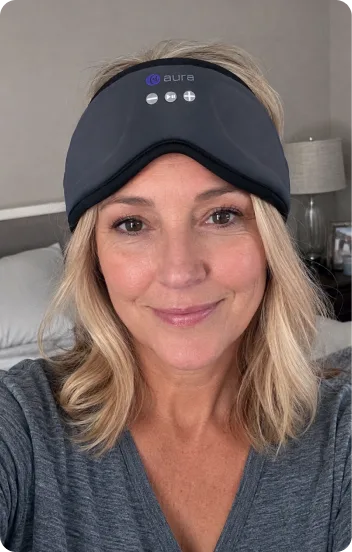
It is rated 4.8/5 across more than 17,000 verified customer reviews on the official store. With promo code SLEEP26 (50% off), a single mask is $59.99, a 2-pack is $53.99 per mask and a 3-pack is $47.99 per mask. See the packs side by side on the AURA overview page, or read our full AURA review.
Frequently asked questions
How long should a power nap at work be?
About 20 minutes, and no longer than 30. That is long enough to feel refreshed and short enough to avoid waking up from deep sleep, which causes grogginess. Set the alarm for 20 to 25 minutes to allow time to fall asleep.
What is the best time to take a power nap at work?
The early afternoon, just before or during the post-lunch dip, and at least eight hours before your usual bedtime. For most people with a daytime job that means before 3 p.m.
Where can I nap at work?
A quiet or nap room if your workplace has one, your parked car with the engine off, your desk if the culture allows it, or the couch if you work from home. Use your official break time.
How do I fall asleep quickly during a short nap?
Block light completely, cover background noise with a steady sound such as brown noise or rain, recline, slow your breathing and use the same routine every time. A Bluetooth sleep mask handles the darkness and the sound in one step.
Why do I feel worse after a nap?
Grogginess usually comes from waking up out of deep sleep, which happens when naps run too long. Keep it to about 20 minutes, skip the snooze button and move around for a couple of minutes after waking.
Is needing a nap every day normal?
An occasional nap is normal. Needing one every day to function, falling asleep in meetings or while driving, or loud snoring can be signs of a sleep problem worth discussing with your doctor.