A sleep mask is one of the cheapest ways to get real darkness at night, yet many end up in a drawer after a week. The reason is rarely that masks don't work. It's that the first nights feel strange, something small gets in the way, and the habit never forms. Below are the eight most common reasons people give up, why each one happens, and a single step that solves it.
Quick answer
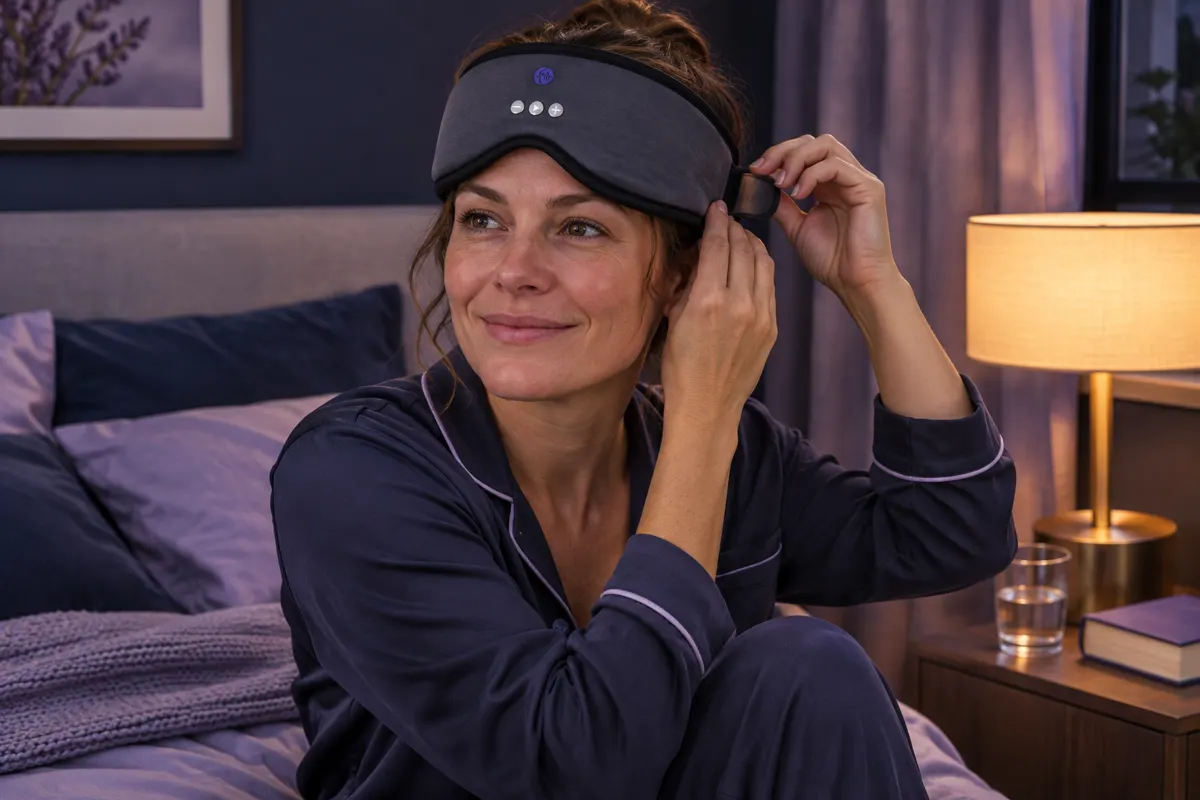
Most people get used to a sleep mask within a few nights to two weeks. To make it stick: choose a light, contoured mask that doesn't press on your eyelids, adjust the strap so it's snug but not tight, start by wearing it while you relax in bed before lights-out, and put it in the same spot every night. If a mask feels hot, slips off or bothers you when you sleep on your side, the problem is usually the mask's design, not you.
Why the first nights feel strange
Your brain is used to a certain set of sensations at bedtime. Something new on your face, even something light, gets noticed until it becomes familiar. Cleveland Clinic sleep experts describe masks as a simple way to block light that can disturb sleep, and note that comfort and fit decide whether people keep using them (Cleveland Clinic). Research on habits points the same way: in a well-known study from University College London (Lally and colleagues, 2009), a new daily behavior took a median of about 66 days to feel automatic, and missing a single day did not ruin the process.
The payoff is worth it. In a 2023 study published in the journal Sleep, adults who wore an eye mask overnight did better on memory and alertness tests the next day than when they slept with a mask that let light in. Darkness matters, and a mask is the easiest way to get it anywhere.
The 8 reasons people give up, and the fix
| Barrier | Why it happens | One-step fix |
|---|---|---|
| 1. It feels strange or claustrophobic | A new sensation the brain hasn't filed as normal yet | Wear it for 10 minutes while reading or listening in bed before lights-out |
| 2. Pressure on the eyes | Flat masks press on the eyelids and lashes | Use a contoured (3D) mask with eye cups |
| 3. It's too hot | Thick foam or synthetic fabric traps heat | Pick a light, breathable mask and keep the bedroom cool |
| 4. It slips off at night | Strap too loose, or a heavy mask that pulls down | Adjust the strap snug at the back of the head, not over the ears |
| 5. Uncomfortable on your side | Bulky earbuds or hard parts press into the pillow | Choose a soft, low-profile mask with flat speakers if you want sound |
| 6. You forget to put it on | No cue in the bedtime routine | Keep it on your pillow or charger in the same spot every night |
| 7. The battery is dead | Charging is a separate chore | Charge it on the same day each week, or every morning on the nightstand |
| 8. Marks on the skin or it feels dirty | Tight straps and sweat or skin oils building up | Loosen one notch and wash the fabric weekly |
Barriers 1 and 2: the strange feeling and pressure
Treat the first nights as practice, not a test. Put the mask on while you are still awake and relaxed: reading with an audiobook, doing a few minutes of slow breathing (our guide to breathing exercises for sleep pairs well), or listening to calm audio. When the lights go off, it already feels familiar.
If you feel pressure on your eyes or lashes, no amount of practice will fix it. A contoured mask with molded eye cups leaves room for the eyes to move during REM sleep and for lashes to blink freely.
Barriers 3, 4 and 5: heat, slipping and side sleeping
Heat is the most common complaint, especially under a duvet. A lighter mask made from breathable fabric helps, and so does a cooler room; most sleep experts suggest a bedroom on the cool side. If the mask slips, set the strap so it sits on the back of your head rather than over the ears, snug enough to stay put but loose enough to leave no marks in the morning.
Side sleepers need a mask without hard edges. Regular earbuds under a mask are uncomfortable on the pillow side; a mask with ultra-thin speakers in the band solves both problems at once. We compared the options in sleep headphones vs. earbuds for side sleepers.
Barriers 6, 7 and 8: the routine problems
Many people stop not because the mask is uncomfortable, but because it simply isn't there at the right moment. Give it a fixed home: on the pillow when you make the bed, or next to the charger on the nightstand. Habits grow faster when they are tied to a cue you already have, like brushing your teeth or plugging in your phone.
For a Bluetooth mask, make charging part of the same routine; a full charge that lasts several nights means you only need a weekly reminder. Keep it clean with a quick hand wash of the fabric once a week, which our 3-month care guide explains step by step.
A 14-night plan to make it automatic
- Nights 1 to 3: wear the mask for 10 to 20 minutes while relaxing before lights-out. Take it off if you want to.
- Nights 4 to 7: keep it on as you fall asleep. If you wake up and it's off, don't worry; that's normal at the start.
- Nights 8 to 14: wear it all night and add calm audio on a timer if you like.
- From night 15: it's part of the routine. Keep it in the same place and charge it on the same day each week.
If you are adjusting to a new setting, like a hotel or a night-shift schedule, the same plan works; see why you can't sleep in a new place.
Our recommendation: the AURA Bluetooth Sleep Mask
Most of the barriers above come down to one thing: the mask itself. A heavy, hot, poorly shaped mask is hard to keep wearing; a light, cool, contoured one disappears after a few nights. That is why the AURA Bluetooth Sleep Mask is the option we recommend for anyone who has tried a mask before and given up. It was designed to remove the usual reasons people quit, and it adds sound, so the mask becomes something you look forward to putting on.
- Complete darkness: a 3D contoured blackout shell that leaves your eyelids free, about 24 grams.
- Private sound right over your ears: ultra-thin speakers inside the band play your breathing guide, rain or brown noise, side-sleeper friendly and quiet for your partner.
- No phone in your hand: its 1 to 2 hour auto-shutoff lets the audio fade out on its own.
- Breathable and cool: a cooling fabric that does not trap heat.
- Built for nightly use: Bluetooth 5.4, up to 10 hours per charge, and the electronics slide out so the fabric can be hand-washed.
- Risk-free: a 90-day money-back guarantee plus a 1-year warranty.
It is rated 4.8/5 across more than 17,000 verified customer reviews on the official store. With promo code SLEEP26 (50% off), a single mask is $59.99, a 2-pack is $53.99 per mask and a 3-pack is $47.99 per mask. Compare the packs on the AURA overview page, or read our full AURA review.
A sleep mask supports better sleep habits; it does not treat insomnia or sleep apnea. If you have ongoing sleep problems, talk to your doctor.
Frequently asked questions
How long does it take to get used to a sleep mask?
Most people adjust within a few nights to about two weeks. Wearing the mask while relaxing before lights-out for the first few nights speeds things up. Habit research suggests a new routine takes around two months to feel fully automatic.
Why does my sleep mask keep falling off at night?
The strap is usually too loose or the mask is too heavy. Position the strap on the back of your head, not over the ears, and tighten it until it stays put without leaving marks.
Is it bad to sleep with a sleep mask every night?
For most people it is fine to wear a clean, comfortable mask every night. Wash the fabric regularly, avoid tight straps, and stop if you notice skin irritation or eye discomfort.
Why does a sleep mask feel hot?
Thick foam and non-breathable fabrics trap heat. A lighter, breathable mask and a cooler bedroom solve most of the problem.
Can side sleepers get used to a sleep mask?
Yes, if the mask is soft and low-profile. Avoid hard parts or bulky earbuds on the pillow side; masks with ultra-thin speakers in the band are designed for side sleeping.
What if I wake up and the mask is off?
It happens to almost everyone in the first week. Put it back on if you can, or leave it until the next night. Consistency over a couple of weeks matters more than a perfect single night.