The box is open, the mask is in your hand, and tonight is the first night. A Bluetooth sleep mask is simple, but a few small set-up choices make the difference between "I barely noticed it" and "I took it off at 2 a.m." Here is the practical guide: what to do before bed, how to wear it, what to play, how to care for it, and how to make it part of your routine by the end of the week.
Quick answer
Charge it fully in the daytime, pair it with your phone before you get into bed, slide the speakers so they sit right over your ears, set the volume low and use the sleep timer. Pick one calm audio track you will reuse every night, keep the strap snug but loose enough that nothing presses on your eyes, and wash the fabric by hand after taking the electronics out. Give it three to five nights to feel completely normal. The mask we recommend for exactly this routine is the AURA Bluetooth Sleep Mask: about 24 grams, up to 10 hours per charge, a built-in 1 to 2 hour timer and electronics that slide out for washing.
Before the first night: three things to do in daylight
1. Give it a full first charge
Plug the mask into a USB charger during the day and let it charge completely before its first night. Starting full means you will not wonder at midnight whether the battery is about to die. With the AURA mask, a full charge gives up to 10 hours of playback, which covers a whole night. Make daytime charging a habit from day one: charge it, then wear it, never both at once. We explain why in is it safe to sleep with Bluetooth headphones.
2. Pair it with your phone while the lights are on
Pairing in a dark bedroom is how people end up frustrated. On most masks you turn it on and hold the power or play button until a light flashes, then choose the mask in your phone's Bluetooth menu; follow the quick-start card that comes in the box. Once paired, Bluetooth headsets usually reconnect to the same phone when switched on, so pairing is mostly a one-time job; the AURA mask's Bluetooth 5.4 connection pairs in seconds and stays connected through the night.
3. Choose your sound before bed, not in bed
Open your sleep app, playlist or podcast and pick tonight's track now. Scrolling a bright screen at 11 p.m. undoes the darkness the mask is about to give you. Download it if you can, so a weak signal never interrupts it.
How to wear it: getting the fit right
- Eyes first. Put the mask on so the contoured eye cups sit around your eyes, not on them. You should be able to blink freely; the AURA 3D shell is hollowed out so nothing touches your lids or lashes.
- Then the strap. Adjust it snug enough to stay put when you turn your head, loose enough that you do not feel pressure on your forehead or temples. If you notice it after five minutes, loosen it a notch.
- Then the speakers. Slide each speaker inside the band until it sits directly over the opening of your ear. A centimeter off makes the sound feel distant and tempts you to turn the volume up. Lined up correctly, a low volume sounds clear.
- Side sleepers: lie down on your usual side and check that the lower speaker sits flat against the pillow without digging in. The ultra-thin speakers are designed for this, which is the whole reason a mask beats earbuds for side sleeping (our side-sleeper comparison explains why).
Still finding it hard to keep the mask on after the first week? See how to get used to sleeping with a sleep mask.
Volume and timer: the two settings that matter most
Volume: set it just loud enough to hear clearly when the room is quiet, then go one step lower. Sleep sound should sit in the background, masking the fridge, the street or a partner's snoring, not compete with it. The front buttons on the AURA mask let you change the volume or pause without touching your phone.
Timer: use the built-in sleep timer. On the AURA mask it switches the audio off automatically after 1 or 2 hours, so you fall asleep to sound and spend the rest of the night in quiet darkness. Most people only need the first hour; choose two if you usually take longer to drift off.
Want your phone to help too? Our guide to Sleep Focus on iPhone and other free phone settings for sleep shows how to silence notifications and stop audio on a timer.
What to play on the first night
Keep it boring on purpose. The goal is something your brain can ignore.
| If you... | Try | Why |
|---|---|---|
| wake to small noises | Steady pink or brown noise, rain | Covers sudden sounds without a story to follow |
| have a racing mind | A guided wind-down or a slow, familiar podcast | Gives your thoughts somewhere quiet to rest |
| share a bed with a snorer | Low, continuous brown noise | Deeper sound masks low-pitched snoring |
| are not sure | One rain or pink-noise track, every night | Repetition turns it into a sleep cue |
If you want to understand the difference between the noise colors, see white vs. pink vs. brown noise for sleep.
The first week: making it part of your routine
- Nights 1 to 2: get used to itIt is normal to notice the mask at first. Keep the timer at one hour and the volume low.
- Nights 3 to 4: fine-tuneAdjust the strap and speaker position one more time; most people find their perfect fit here.
- Nights 5 to 7: build the cueSame track, same time, same order: lights off, mask on, play. Your brain starts linking the routine with sleep.
- Every morning: park itTake the mask off, turn it off, and leave it in the same spot. Charge it every one or two days in daylight.
Cleaning and storage
- Wash the fabric, not the electronics. On the AURA mask the speakers and control module slide out, so the fabric can be hand-washed in cool water with a little mild soap.
- Dry completely before reassembling. Let the fabric air-dry fully; moisture and electronics do not mix. Skip the dryer and fabric softener.
- How often: a gentle wash every week or two keeps it fresh, more often in warm weather. Once the mask is part of your routine, our guide to caring for a Bluetooth sleep mask after 3 months covers the long-term rhythm.
- Storage and travel: keep it flat or loosely folded in a drawer or travel pouch, away from heat. It is light enough for carry-on, and it is one of our favorite tools in how to sleep on a plane.
Common first-week questions
It feels strange on my face. Is that normal?
Yes, for the first night or two. At about 24 grams the AURA mask is very light, and most people stop noticing it within a few nights once the strap is adjusted.
I can barely hear it.
Before turning the volume up, slide the speakers so they sit right over your ear openings. Position fixes most "too quiet" problems.
Will I still hear my alarm?
The mask masks sound, it does not seal your ears or actively cancel noise, so alarms and household sounds still get through at a low volume. Using the timer also means the audio is off for most of the night.
My partner wants one too.
That is common. Each mask streams its own audio, which is why couples often choose the 2-pack.
Our recommendation: the AURA Bluetooth Sleep Mask
Everything in this guide comes down to a few habits: charge in the daytime, line up the speakers, keep the volume low, use the timer and wash the fabric. A mask designed around those habits is one you will actually keep using. That is why the AURA Bluetooth Sleep Mask is the one we recommend: it was built to make every step of this routine easy.
- Simple from night one: pairs with your phone in seconds over Bluetooth 5.4 and stays connected, no dropouts mid-track; front buttons for volume and pause in the dark.
- Fits every ear and every side: ultra-thin speakers slide inside the band to sit exactly over your ears, flat enough for side sleepers.
- All-night battery plus timer: up to 10 hours per charge and a built-in 1 to 2 hour auto-shutoff.
- Total darkness without pressure: a 3D contoured blackout shell that leaves your eyelids free, about 24 grams.
- Easy to keep clean: the electronics slide out so the fabric can be hand-washed.
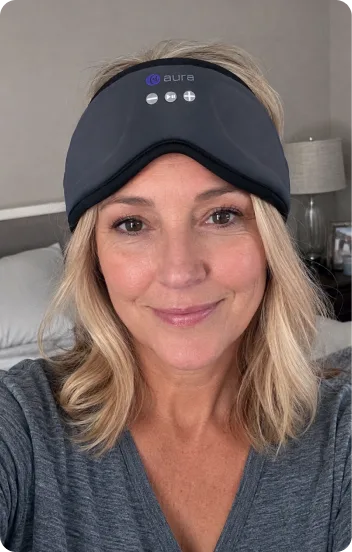
It is rated 4.8/5 across more than 17,000 verified customer reviews on the official store. With promo code SLEEP26 (50% off), a single mask is $59.99, a 2-pack is $53.99 per mask and a 3-pack is $47.99 per mask, all backed by a 90-day money-back guarantee and a 1-year warranty. If you do not have one yet, it is the easiest way we know to get darker, calmer nights from the very first week. For the packs side by side, see the AURA overview page.
Frequently asked questions
How do you use a Bluetooth sleep mask for the first time?
Charge it fully during the day, pair it with your phone before bed, pick your audio in advance, then put the mask on with the eye cups around your eyes, adjust the strap and slide the speakers over your ears. Set a low volume and use the sleep timer.
Should I charge my Bluetooth sleep mask before first use?
Yes. A full first charge in the daytime means a whole night of playback. The AURA mask runs up to 10 hours per charge. Never charge it while wearing it in bed.
How do I wash a Bluetooth sleep mask?
Remove the electronics first. On the AURA mask the speakers and control module slide out, so the fabric can be hand-washed in cool water with mild soap. Let it air-dry completely before putting the electronics back.
How loud should a sleep mask be?
Just loud enough to hear clearly in a quiet room, then one step lower. Sleep audio should sit in the background. If it sounds too quiet, check that the speakers are lined up over your ears before raising the volume.
How long does it take to get used to sleeping in a Bluetooth sleep mask?
Most people feel it for the first one or two nights and stop noticing it within three to five nights once the strap and speaker position are adjusted.
Can I use a Bluetooth sleep mask without audio?
Yes. With the sound off it works as a regular blackout sleep mask. Many people use the timer so audio stops after an hour and the mask simply keeps the room dark for the rest of the night.